Archaeologist of fishing, fisheries, and coastal foodways — connecting the deep past to living communities
I am an archaeologist interested in discovering how past societies interacted with their surrounding environments—how they fished, ate, and organized their lives, and what that history means for the communities and fisheries of today. I use historical ecology as a framework to connect the archaeological past to the present, always through community-centered, collaborative research that integrates fish-bone analysis, biomolecular methods, and local knowledge.
I am a Research Associate in the Department of Anthropology at the Smithsonian National Museum of Natural History and director of the EcologicaL Legacies in Archaeology (ELLA) Laboratory.
Explore some of my main research questions:
Foodways
How does daily food shape social identity and interaction?
Historical Ecology
How have humans transformed their environments over time?
Zooarchaeology
What can we learn from studying old fish bones?
 Foodways
How does daily food shape social identity and interaction?
We all need food to survive. Our daily actions to find, prepare, and eat our food shape the way we see ourselves and how we interact with others. For example, people use food to strengthen ties to their communities and to increase their influence over others.
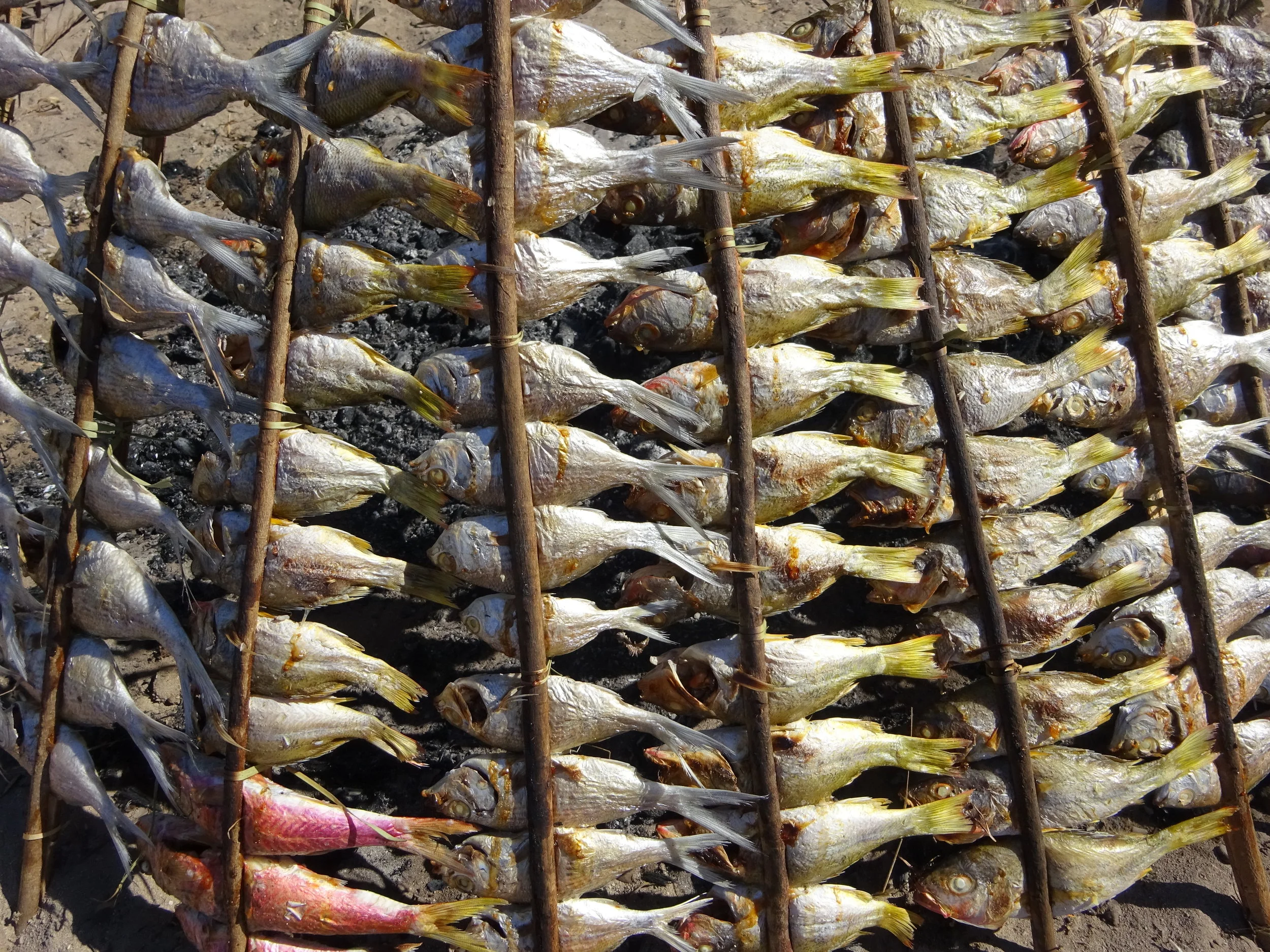
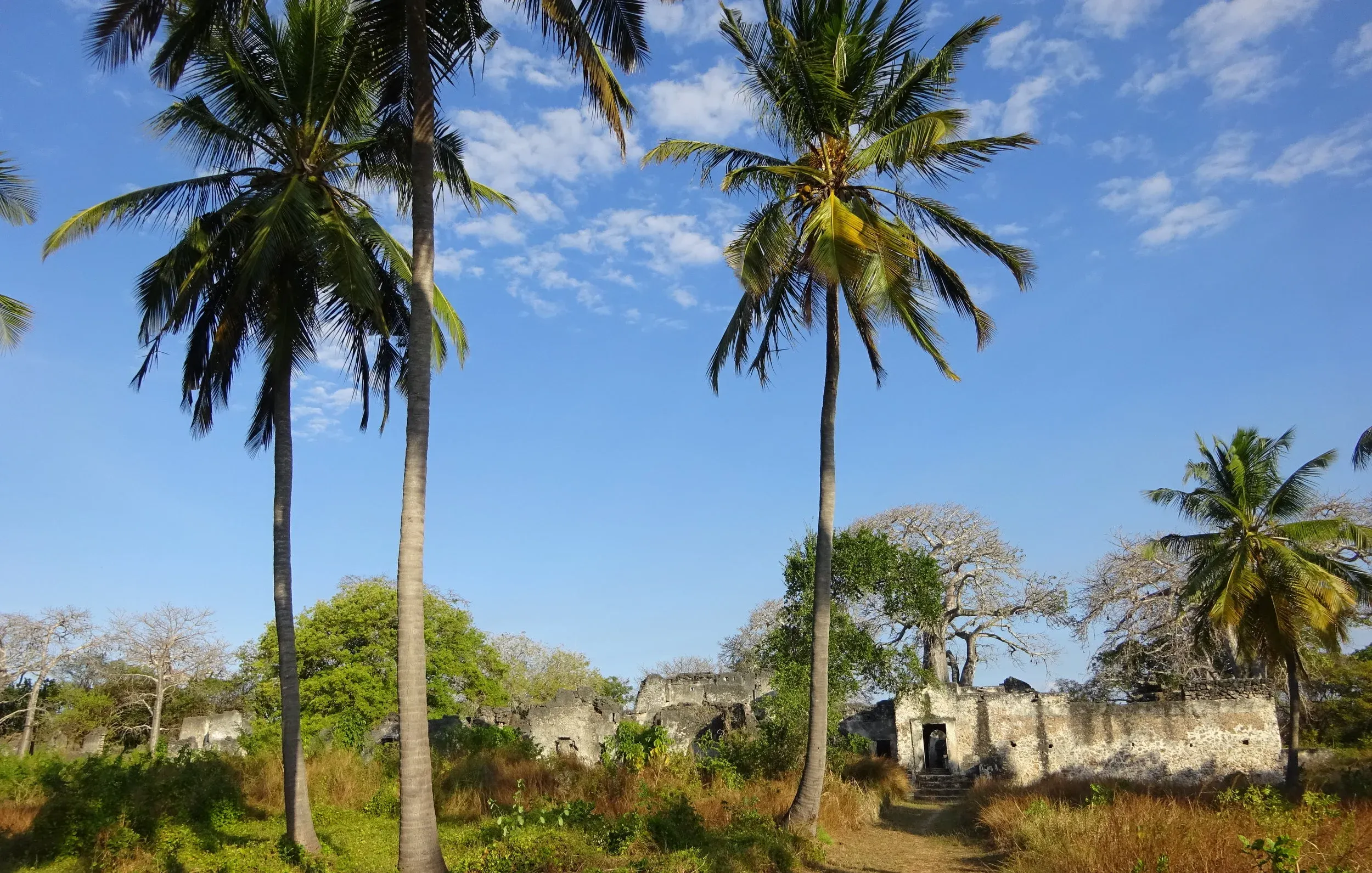
I examined daily food at the 14th-15th century coastal town of Songo Mnara by studying fish bones and pottery fragments, the two most common remains of daily meals at many Swahili archaeological sites. At Songo Mnara, these artifacts of daily food are found in association with a variety of houses across the town, allowing me to compare the types and sizes of fish eaten by past residents as well as the shapes, sizes, and decorations of the clay containers they used to cook and serve their food. I also used organic residue analysis to identify residues of fats and oils preserved in the pottery fragments, providing the first glimpse of what types of foods were cooked or stored in the pottery from Songo Mnara.
Did all residents eat the same food and in a similar way? Why or why not? Check out our open source article (opens in new tab) for the results!
 Historical Ecology
How have humans transformed their environments over time?
We have been transforming our world for as long as we've existed. To make better choices today, we need to understand the impacts of past choices and collaborate with local communities (opens in new tab).
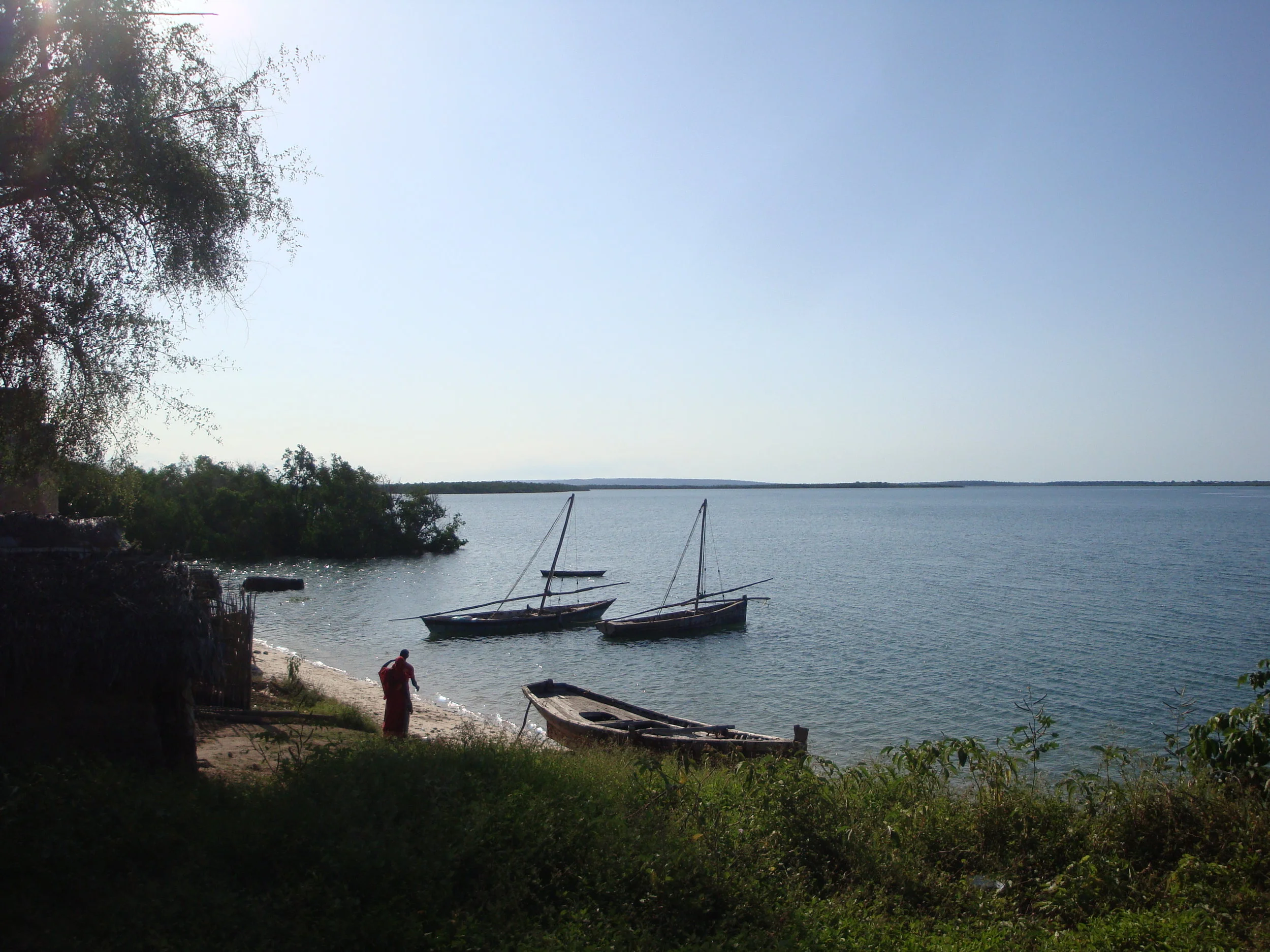
Fishing is a major source of food and a way of life for people living in coastal eastern Africa today. Although archaeological evidence shows that people have been fishing on the coasts and islands of eastern Africa for hundreds of years, the rich biodiversity and the future of fishing in this region is threatened by climate change, overfishing, and other anthropogenic factors. My research contributes to our understanding of past fishing practices, such as information about the types of fish and aquatic environments that people exploited over time, which provides important historical context for today's fisheries. For example, recent work in collaboration with international and local biologists, conservationists, and fishers combined data from the archaeological record, underwater surveys, fish landings, and oral histories to help identify reef fish at risk of local extinction (opens in new tab).
 Zooarchaeology
What can we learn from studying old fish bones?
We have many types of relationships with other animals; for example, animals play a role in our lives as food, pets, and symbols. Investigating how animals are integrated into human lives helps us understand our past.
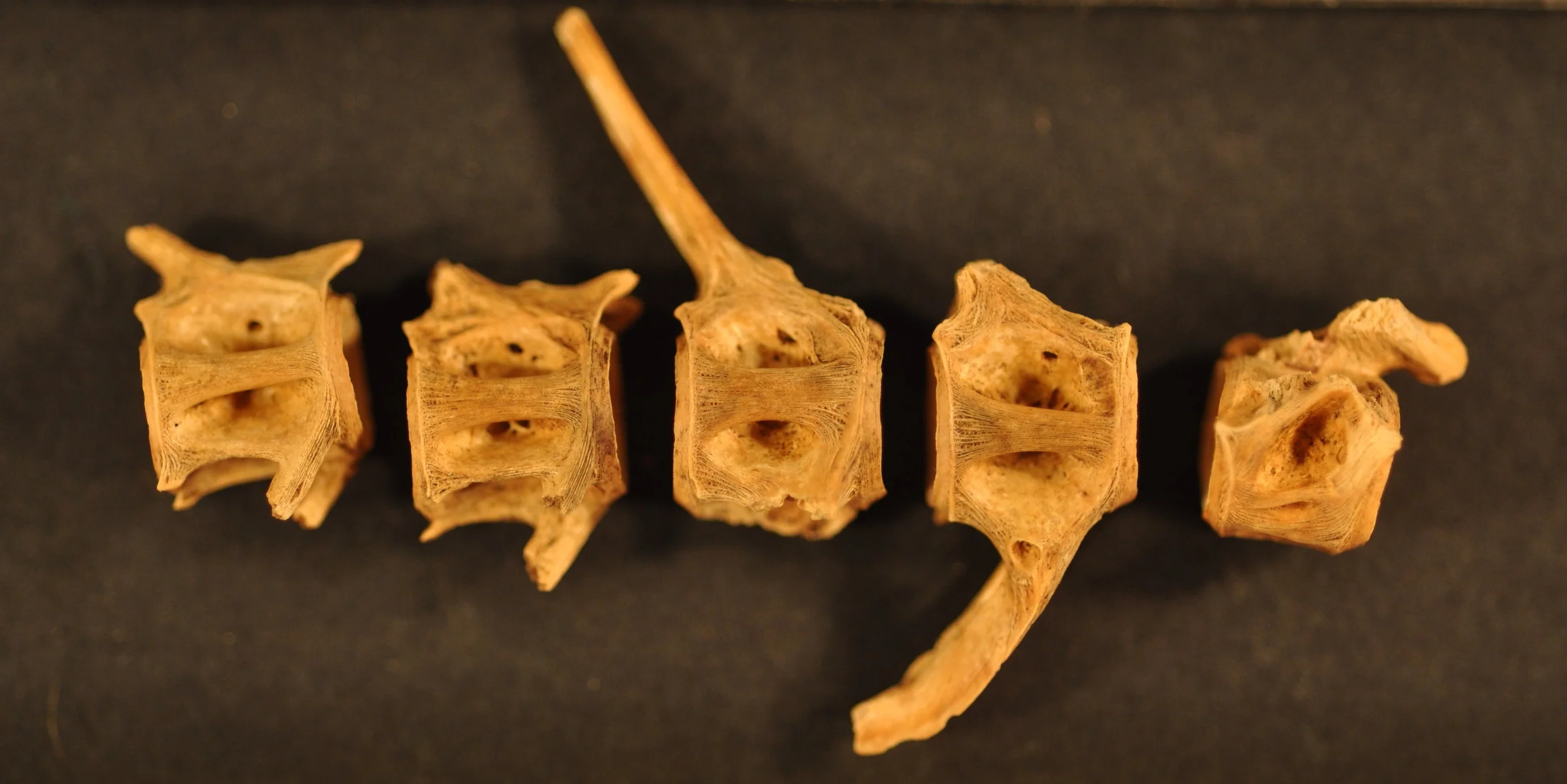
Fish bones are abundant at archaeological sites in coastal, island, and other aquatic areas across the world. They provide important clues about how people lived in the past because fish are entangled in people's lives from the moment they are captured, processed, and eventually consumed and discarded. I analyze fish remains to understand how these daily activities shaped people's identity, their inter-relationships and their dynamic interactions with their surrounding environment.
I love to share what I do and to inspire others to join this unique and rewarding field of study!
 Publications
Academia.edu | Google Scholar | ResearchGate
2026
Welker, M.H., S. Needs-Howarth, and E.M. Quintana Morales. Swimming Upriver? Exploring the Sources of Freshwater and Marine Fish in Military Diet in Sixteenth- to Nineteenth-Century Northeastern North America. International Journal of Osteoarchaeology. DOI: 10.1002/oa.70136
2023
Quintana Morales, E.M. Review of African Islands: A Comparative Archaeology, by Peter Mitchell. Oxford: Routledge, 2022. Antiquity 97(393). DOI: 10.15184/aqy.2023.56
2022
Quintana Morales, E.M. Review of Connecting Continents: Archaeology and History in the Indian Ocean World, Krish Seetah, editor, 2018. American Antiquity 87(2). DOI: 10.1017/aaq.2021.144
Quintana Morales, E.M., O.E. Craig, M.E. Prendergast, S. Walshaw, C. Cartaciano, O. Mwebi, E. Nguta, V. Onduso, J. Fleisher, and S. Wynne-Jones. Diet, economy, and culinary practices at the height of precolonial Swahili urbanism. Journal of Anthropological Archaeology 66 (101406).
Welker, M. and E.M. Quintana Morales. The North Atlantic Cod Trade: A Meta-Analysis of the North American and European Archaeological Records. Journal of Island and Coastal Archaeology.
Yu, H., A. Jamieson, A. Hulme-Beaman, C.J. Conroy, B. Knight, C. Speller, H. Al-Jarah, H. Eager, A. Trinks, G. Adikari, H. Baron, B. Böhlendorf-Arslan, W. Bohingamuwa, A. Crowther, T. Cucchi, K. Esser, J. Fleisher, L. Gidney, E. Gladilina, … E.M. Quintana Morales, … D. Orton. Palaeogenomic analysis of black rat (Rattus rattus) reveals multiple European introductions associated with human economic history. Nature Communications 13 (2399).
2021
Faulkner, P., J.M. Miller, E.M. Quintana Morales, A. Crowther, C. Shipton, E. Ndiema, N. Boivin, and M. Petraglia. 67,000 years of coastal engagement at Panga ya Saidi, eastern Africa. PLOS ONE 16(8).
2019
Douglass, K., E. Quintana Morales, G. Manahira, F. Fenomanana, R. Samba, F. Lahiniriko, Z.M. Chrisostome, V. Vavisoa, P. Soafiavy, R. Justome, H. Leonce, L. Hubertine, B.V. Pierre, C. Tahirisoa, C.S. Colomb, F.S. Lovanirina, V. Andriankaja, and R. Robison. Toward a just and inclusive environmental archaeology of southwest Madagascar. Journal of Social Archaeology.
Buckley, S.M., T. McClanahan, E.M. Quintana Morales, V. Mwakha, J. Nyanapah, L. Otwoma, and J.M. Pandolfi. Identifying species threatened with local extinction in tropical reef fisheries using historical reconstruction of species occurrence. PLOS ONE 14(2): e0211224.
Douglass, K., J. Walz, E.M. Quintana Morales, R. Marcus, G. Myers, and J. Pollini. Historical perspectives on contemporary human–environment dynamics in southeast Africa. Conservation Biology.
2018
Douglass, K., A. Antonites, E.M. Quintana Morales, A. Grealy, M. Bunce, C. Bruwer, and C. Gough. Multi-analytical approach to zooarchaeological assemblages elucidates Late Holocene coastal lifeways in southwest Madagascar. Quaternary International 471: 111–131.
2017
Quintana Morales, E.M., D. Lepofsky, and F. Berkes. Ethnobiology and fisheries: Learning from the past for the present. Journal of Ethnobiology 37(3): 369–379.
Quintana Morales, E.M. and M.E. Prendergast. Animals and their uses in the Swahili world. In The Swahili World, S. Wynne-Jones and A. LaViolette, editors. London: Routledge. (PDF)
Prendergast, M.E., E.M. Quintana Morales, A. Crowther, M.C. Horton, and N.L. Boivin. Dietary diversity on the Swahili coast: the fauna from two Zanzibar trading locales. International Journal of Osteoarchaeology 27(4): 621–637.
Armstrong, C.G., A.C. Shoemaker, I. McKechnie, A. Ekblom, P. Szabó, P.J. Lane, A. McAlvay, O.J. Boles, S. Walshaw, N. Petek, K.S. Gibbons, E. Quintana Morales, E.N. Anderson, A. Ibragimow, G. Podruczny, J.C. Vamosi, T. Marks-Block, J.K. LeCompte, S. Awāsis, C. Nabess, P. Sinclair, and C.L. Crumley. Anthropological contributions to historical ecology: 50 questions, infinite prospects. PLOS ONE 12(2).
Prendergast, M.E., M. Buckley, A. Crowther, L. Frantz, H. Eager, O. Lebrasseur, R. Hutterer, A. Hulme-Beaman, W. Van Neer, K. Douka, M. Veall, E.M. Quintana Morales, et al. Reconstructing Asian faunal introductions to Eastern Africa from multi-proxy biomolecular and archaeological datasets. PLOS ONE 12(8).
Ottoni, C., W. Van Neer, B. De Cupere, J. Daligault, S. Guimaraes, J. Peters, N. Spassov, M.E. Prendergast, N. Boivin, A. Morales-Muñiz, A. Bălăşescu, C. Becker, N. Benecke, A. Boroneant, H. Buitenhuis, J. Chahoud, A. Crowther, L. Llorente, N. Manaseryan, H. Monchot, V. Onar, M. Osypińska, O. Putelat, E.M. Quintana Morales, et al. The palaeogenetics of cat dispersal in the ancient world. Nature Ecology and Evolution 1(139).
2016
Crowther, A., P. Faulkner, M. Prendergast, E.M. Quintana Morales, M. Horton, E. Wilmsen, A.M. Kotarba-Morley, A. Christie, N. Petek, R. Tibesasa, K. Douka, L. Picornell-Gelabert, X. Carah, and N. Boivin. Coastal subsistence, island colonization and maritime population dispersal in eastern African prehistory. Journal of Island and Coastal Archaeology 11(2): 211–237.
Langley, M.C., M. Prendergast, C. Shipton, E.M. Quintana Morales, A. Crowther, and N. Boivin. Poison arrows and bone utensils in Late Pleistocene Eastern Africa: Evidence from Kuumbi Cave, Zanzibar. Azania: Archaeological Research in Africa 51(2): 155–177.
Shipton, C., A. Crowther, N. Kourampas, M.E. Prendergast, M. Horton, K. Douka, J-L. Schwenninger, P. Faulkner, E.M. Quintana Morales, M.C. Langley, R. Tibesasa, L. Picornell-Gelabert, E. Wilmsen, C. Doherty, M-A. Veall, A.K. Ali, M.D. Petraglia, and N. Boivin. Reinvestigation of Kuumbi Cave, Zanzibar, reveals Later Stone Age coastal habitation, early Holocene abandonment, and Iron Age reoccupation. Azania: Archaeological Research in Africa 51(2): 197–233.
2015
Fleisher, J., P. Lane, A. LaViolette, M. Horton, E. Pollard, E. Quintana Morales, T. Vernet, A. Christie, and S. Wynne-Jones. When did the Swahili become maritime? American Anthropologist 117(1): 100–115.
2014
Quintana Morales, E.M. and M. Horton. Fishing and fish consumption in the Swahili Communities of East Africa, 700–1400 CE. Internet Archaeology 37.
Crowther, A., M. Horton, A. Kotarba-Morley, M. Prendergast, E. Quintana Morales, M. Wood, C. Shipton, D.Q. Fuller, R. Tibesasa, W. Mills, and N. Boivin. Iron Age agriculture, fishing and trade in the Mafia Archipelago, Tanzania: New evidence from Ukunju Cave. Azania: Archaeological Research in Africa 49(1): 21–44.
2013
Quintana Morales, E.M. Shifting fish consumption and climate change on the Swahili coast (AD 800–1500). Archaeofauna: International Journal of Archaeozoology 22(2): 113–122.
Quintana Morales, E.M. Reconstructing Swahili Foodways: The Archaeology of Fishing and Fish Consumption in Coastal East Africa, AD 500–1500. PhD dissertation, University of Bristol. (PDF)