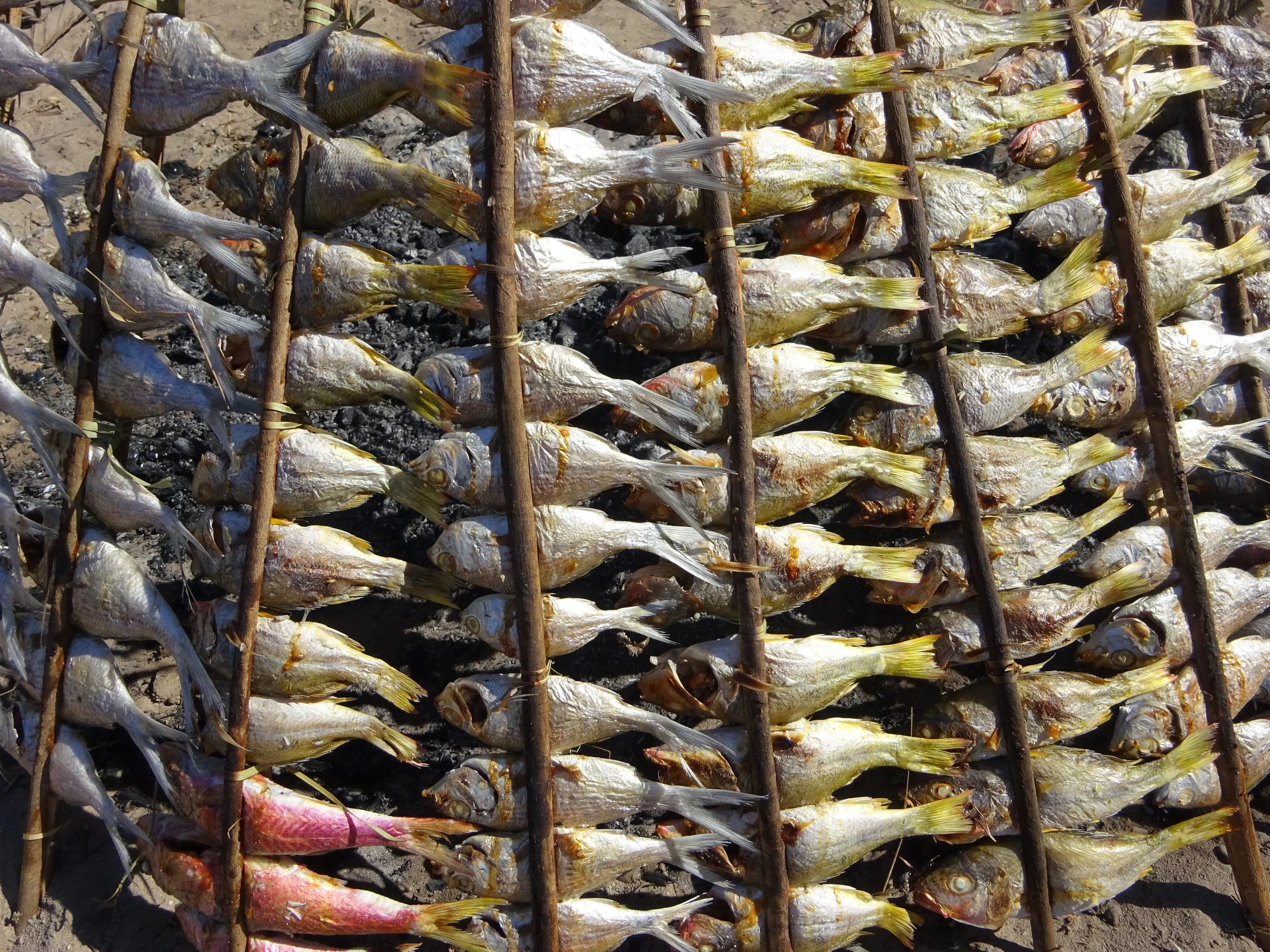
How does daily food shape social identity and interaction?
We all need food to survive. Our daily actions to find, prepare, and eat our food shape the way we see ourselves and how we interact with others. For example, people use food to strengthen ties to their communities and to increase their influence over others.
I examined daily food at the 14th-15th century coastal town of Songo Mnara by studying fish bones and pottery fragments, the two most common remains of daily meals at many Swahili archaeological sites. At Songo Mnara, these artifacts of daily food are found in association with a variety of houses across the town, allowing me to compare the types and sizes of fish eaten by past residents as well as the shapes, sizes, and decorations of the clay containers they used to cook and serve their food. I also used organic residue analysis to identify residues of fats and oils preserved in the pottery fragments, providing the first glimpse of what types of foods were cooked or stored in the pottery from Songo Mnara.
Did all residents eat the same food and in a similar way? Why or why not? Check out our open source article for the results!